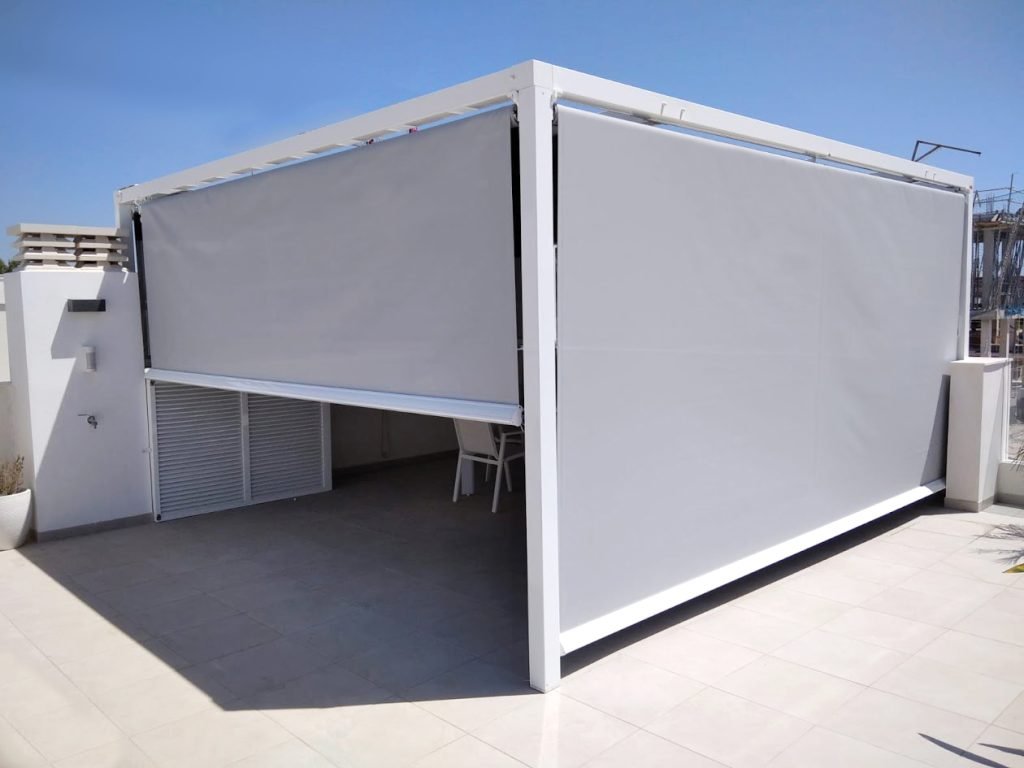
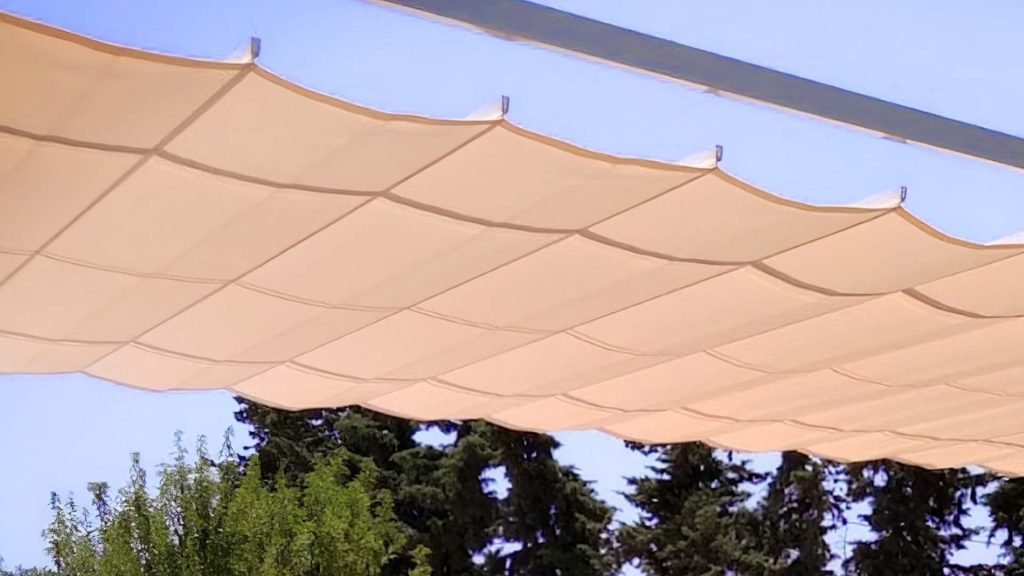
Energy certification in buildings is a key factor in modern architecture, and more and more projects seek to meet demanding standards in order to obtain certifications such as LEED, BREEAM or Passivhaus. In this context, solar-shading systems such as awnings and pergolas play a fundamental role in improving thermal comfort and reducing buildings’ energy consumption.

At Tecnitoldo, we work with architects, developers and designers to integrate efficient shading solutions, optimising energy performance without compromising aesthetics or functionality.
How do awnings and pergolas affect energy efficiency?
Correct management of solar radiation is key to maintaining thermal balance in any building. Without solar protection, sunlight strikes glazing and facades directly, creating a greenhouse effect that raises indoor temperature and increases the need for air conditioning.
Awnings and pergolas can:
✅ Reduce a building’s thermal load, lowering the need for cooling in summer.
✅ Optimise natural daylight, avoiding excessive reliance on artificial lighting.
✅ Improve thermal comfort, regulating temperature passively and naturally.
✅ Protect facades and glazing, preventing overheating and extending material life.
Awnings and pergolas: allies for sustainable architecture
Motorised awnings with weather sensors
Automated awnings enable intelligent, efficient shade management according to solar radiation, weather conditions and the user’s specific requirements. These advanced systems, equipped with wind, sun and rain sensors, can extend or retract awnings automatically in response to weather changes, ensuring effective, timely protection without manual intervention. This not only improves the comfort and wellbeing of outdoor spaces, but also contributes to energy conservation by regulating indoor temperatures and maximising daylight without the drawbacks of excessive heat or glare.
Bioclimatic pergolas: natural thermal regulation
Bioclimatic pergolas are among the most advanced and effective solutions in contemporary sustainable architecture. These innovative structures feature adjustable louvres, which not only allow precise regulation of natural daylight and ventilation but also help create a comfortable, pleasant setting. This reduces reliance on artificial climate control, significantly lowering energy consumption and supporting energy certification in buildings. Integrating these pergolas into residential and commercial projects can also increase energy efficiency and property value, making them a highly attractive option for those seeking to improve their space and contribute to a more sustainable future.
High-performance materials
At Tecnitoldo, we use high-quality technical fabrics with reflective and filtering properties, specifically designed to block harmful UV rays effectively without compromising the natural daylight needed in our spaces. These fabrics not only protect against solar radiation but also optimise indoor brightness, creating pleasant, healthy settings. In addition, our structures are meticulously designed using durable materials that can withstand extreme weather conditions, including strong winds and heavy rain, without losing efficiency or functionality. We ensure that every product offers maximum strength and durability, guaranteeing long-term customer satisfaction.

Benefits of energy certification
Including solar-shading systems in an architectural project can contribute key points towards certifications such as:
• LEED: Reduces energy consumption and improves a building’s thermal efficiency.
• BREEAM: Contributes to reducing the environmental impact of construction.
• Passivhaus: Supports the design of nearly zero-energy buildings (nZEB).
Professionals seeking to achieve these standards can rely on Tecnitoldo as a strategic partner for integrating efficient, aesthetically refined solutions.

Tecnitoldo: your partner in efficient architecture
If you are an architect, developer or designer looking to integrate efficient solar-shading solutions, Tecnitoldo offers technical advice and products designed to meet the most demanding standards.
• Contact us to discover how we can help optimise the energy efficiency of your projects.