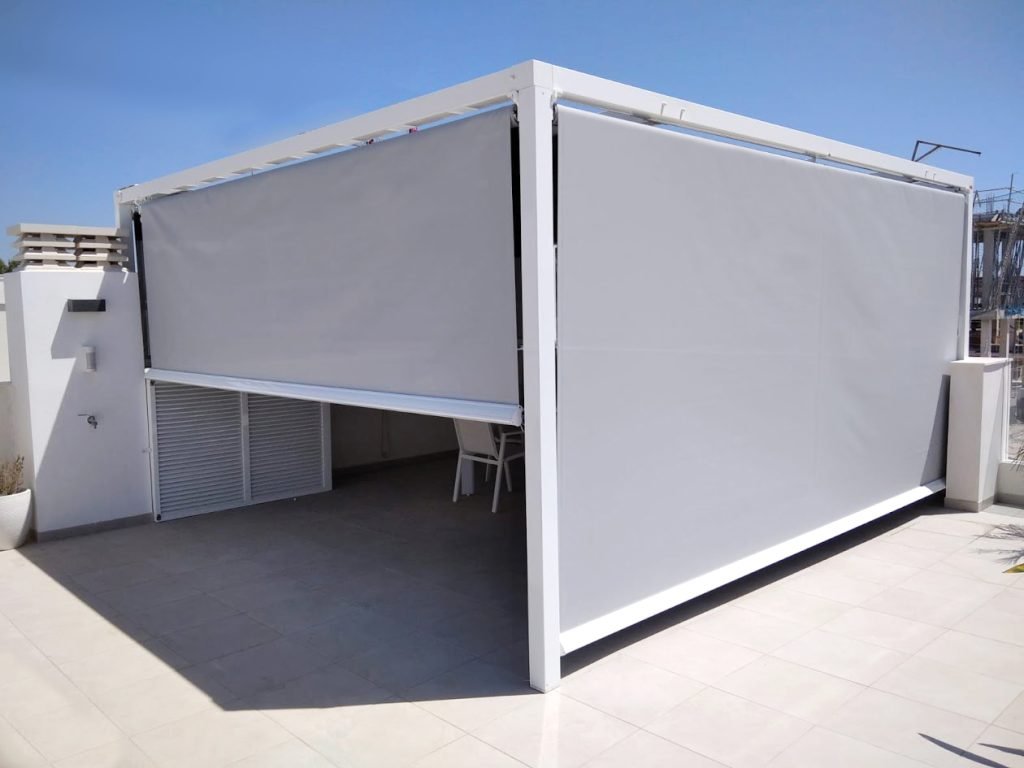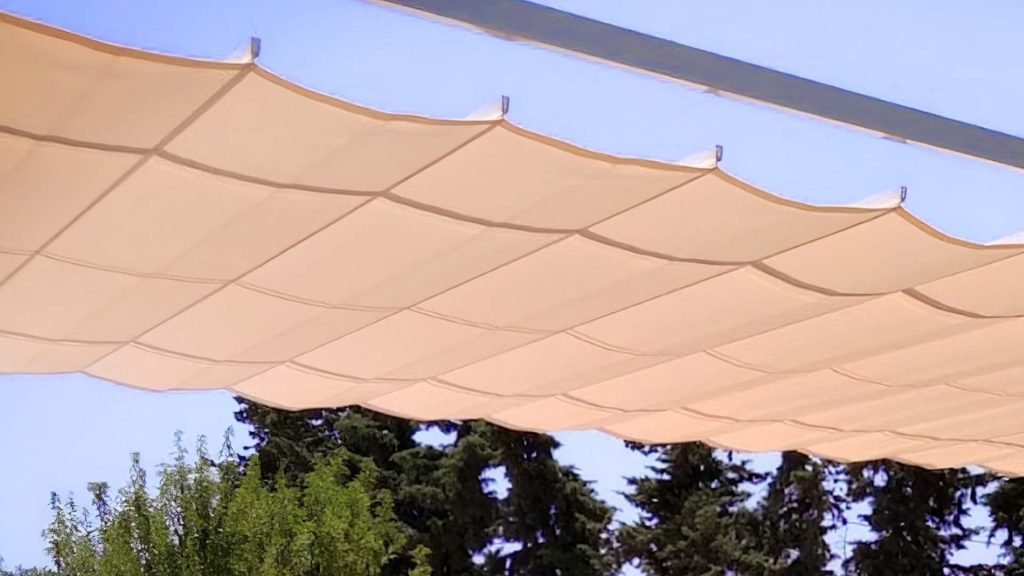
The sliding-canopy awning between walls is one of the most effective and elegant ways to cover courtyards, recessed terraces and spaces bounded by side walls. Its sliding system, with guides fixed directly to the walls, makes maximum use of the available space while providing uniform, practical and attractive shade.
If you need solar protection without installing a freestanding structure, this system is a practical, durable and fully customisable alternative.
What is a sliding-canopy awning between walls?
A sliding-canopy awning between walls is a sliding fabric system installed directly between two facing walls.
It comprises:
- Side guides anchored to each wall
- Horizontal crossbars that tension the fabric
- Manual or motorised retraction system
- Technical fabric resistant to sun, rain and moisture
Because it requires no posts or supporting frame below, it is an excellent choice for narrow courtyards or recessed terraces where space is limited.
When is this type of installation recommended?
A sliding-canopy awning between walls is ideal for:
- Courtyards in detached homes
- Recessed terraces in apartment buildings
- Verandas with enclosed sides
- Spaces between party walls
- Restaurants with courtyards
It is especially useful where two solid existing walls allow the guides to be fixed securely.

Benefits of a sliding-canopy awning between walls
A sliding-canopy awning between walls makes exceptional use of space because it needs no columns or additional vertical supports, leaving the area completely clear and usable. Installed directly between walls, it has a clean, discreet appearance that integrates easily into any courtyard or recessed terrace. Anchoring on both sides also provides excellent stability and wind resistance, provided the installation is properly designed for its dimensions.
Another major benefit is its adjustable opening, which allows the space to be covered fully or partially according to the amount of shade required. Motorisation, remote control and even wind or sun sensors can also be added, increasing convenience and making the system easier to use every day.
Which fabric should you choose?
Choosing the right fabric is essential to the awning’s performance and durability. The most common options are:
- Acrylic canvas: high UV resistance and a wide choice of colours.
- Micro-perforated fabric: allows ventilation and reduces the sail effect.
- Waterproof PVC fabrics: ideal when protection from light rain is required.
Professional advice will help you select the right option for the space’s orientation and intended use.
Technical considerations
Before installing a sliding-canopy awning between walls, it is important to assess:
- The structural strength of the walls
- The exact distance between the walls
- The pitch required for water run-off
- The recommended maximum dimensions
- The appropriate type of fixing
Professional installation ensures safety, durability and correct system tension.

Can it be installed in any space?
In most cases, yes, provided that:
- The walls are in good condition
- There are no significant differences in level
- There is a sound structural base for the fixings
Special situations may require reinforcement or additional supports.
How much does a sliding-canopy awning between walls cost?
The price will depend on:
- The dimensions of the space
- The type of fabric
- Manual or motorised operation
- The complexity of the installation
Every project is made to measure, so requesting a personalised quote is the best way to obtain an accurate price.
A sliding-canopy awning between walls is a practical, elegant and highly efficient way to protect courtyards and terraces bounded by walls. It provides comfort, adjustable light and more seamless visual integration than alternatives requiring a supporting structure.
If you are planning to cover your courtyard or terrace, this system could be the most practical and durable choice.