In architecture and exterior design, every element added to a facade must strike a balance between aesthetics and functionality. Facade awnings not only provide shade and protection from the weather, but also influence the visual perception of a building. A poorly integrated awning can disrupt a harmonious design, while a well-chosen one can enhance the architectural identity and add value to the project.
For architects and interior designers, selecting facade awnings goes beyond simply choosing a colour or material. It means finding the solution that best suits the building’s structure, respecting its style and optimising its energy efficiency. Advances in materials and technology also enable customisation that makes it easier to integrate awnings with different facade types, from historic buildings to modern, minimalist constructions.
Below, we outline how to integrate facade awnings effectively, from material selection to automation and customisation, ensuring they fulfil their function without altering the harmony of the architectural design.

Aesthetic coherence in the integration of facade awnings
When integrating facade awnings into an architectural design, aesthetics should be the guiding principle. An awning should not be added in isolation; it should become an extension of the building. This means its form, colour and material must harmonise with the property’s architectural features.
For classically or traditionally styled buildings, facade awnings with curved or drop-arm forms in neutral or pastel tones can complement facades with mouldings or ornamental details. The key is to maintain a balance between the awning structure’s modernity and the facade’s historic character.
In modern or minimalist buildings, awnings should adopt straighter lines and more neutral colours, such as white, grey or black. Their design should not compete with the facade, but enhance it discreetly. In these cases, materials such as powder-coated aluminium or stainless steel help achieve perfect integration, so the awning is not perceived as an external addition.
In commercial settings, facade awnings can also play a role beyond solar protection. They are an opportunity to reinforce a brand’s visual identity. Using corporate colours or adding logos by screen printing turns the awning into a marketing tool that enhances the facade and reinforces the business image rather than clashing with it.

Choosing suitable materials and finishes for facade awnings
The material used for facade awnings is fundamental to their visual and functional integration. Alongside appearance, good material ensures the awning’s durability and resistance to weathering, especially in areas with high solar radiation, wind or humidity.
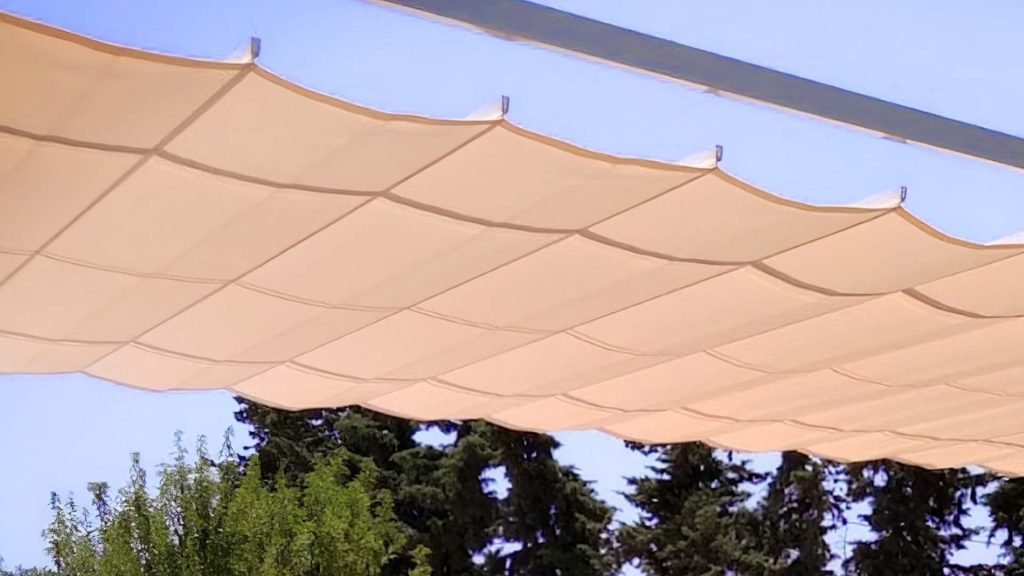
Acrylic fabrics are among the most popular options because of their high UV resistance, helping protect the facade and the interior of a home or business. They also offer a wide range of finishes, from solid colours to patterned fabrics. In warm areas, micro-perforated fabrics are very useful because they allow ventilation while blocking excessive heat without dramatically darkening interiors.
The structure of facade awnings should also be selected with great care. Aluminium is one of the most common materials because of its strength and light weight. It can also be powder-coated in different colours or anodised to create a protective layer, ensuring the awning retains its appearance for years. Metallic or matt finishes are highly suitable for modern, minimalist facades, while warmer or wood-effect finishes are ideal for rustic spaces or more natural architecture.
Another important aspect is choosing moisture-resistant or stain-resistant fabric finishes. This not only extends the awning’s service life but also makes maintenance easier, especially on weather-exposed facades. If you are looking for awnings in Murcia, Tecnitoldo offers premium materials and a broad range of options.
Types of facade awnings and their integration into different architectural styles
Every architectural project requires a specific type of facade awning suited to the building’s functional and aesthetic requirements. Selecting the right model guarantees not only harmonious visual integration, but also better use of space and more efficient solar protection. We offer a broad range of awning types; here are a few.
Balcony awnings: aesthetic protection and facade functionality
Facade awnings are key elements in a building’s aesthetic and functional integration, providing solar protection and improving the comfort of outdoor spaces. Choosing suitable materials and finishes, such as acrylic fabrics and aluminium structures, is fundamental to achieving harmony with the architectural style. Balcony awnings, for example, are ideal for protecting these areas without sacrificing aesthetics, offering shade and comfort, especially on minimalist or modern buildings. Automation also allows these systems to be controlled more efficiently in response to weather conditions. With customisable designs and colours, facade awnings perform a practical function while also enhancing the building’s appearance, creating more usable and attractive outdoor spaces.

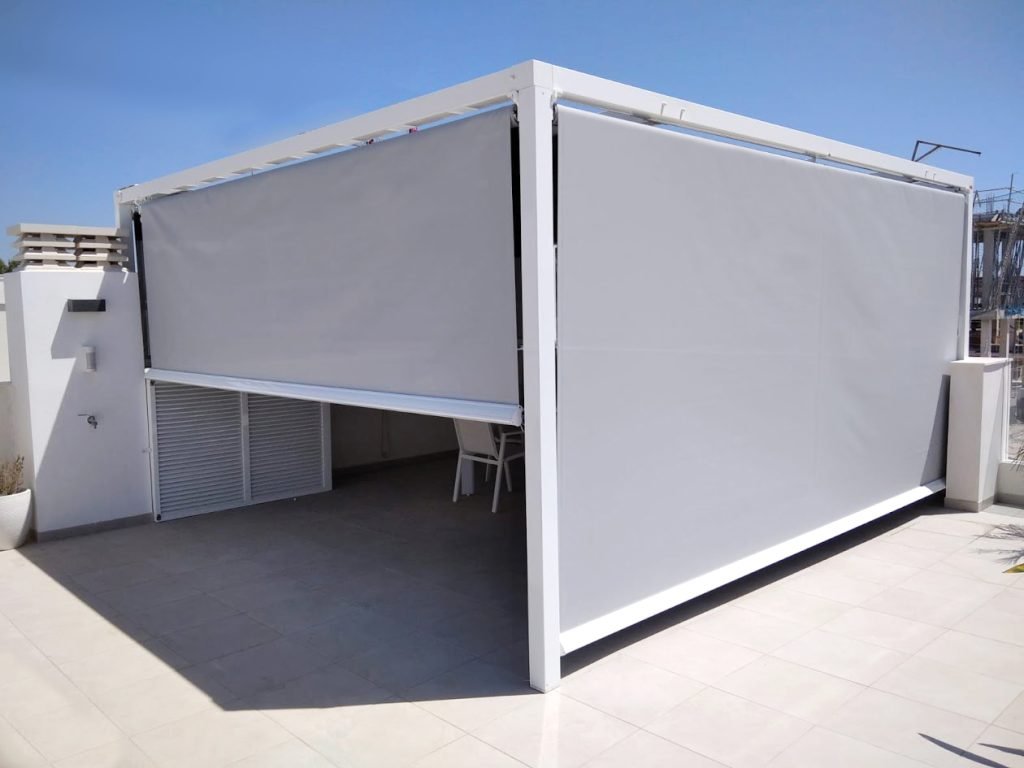
Vertical screens and windbreak awnings on facades with terraces
Vertical facade screens are perfect for buildings with balconies or terraces. They not only protect against the sun but also act as wind barriers, increasing outdoor comfort. They also allow ventilation to remain unaffected, which is particularly important on terraces and open spaces. In commercial settings, this type of screen can help create a more pleasant environment for customers, making terraces more comfortable to use.
Drop-arm awnings for traditional and commercial facades
For traditional or commercial facades, drop-arm facade awnings are a classic, practical option. This type of awning provides efficient shade without complex structures, and its straight-line design suits almost any type of building, from residential to commercial. Its ability to cover large areas also makes it an excellent solution for shops that need to protect displays or terraces.
Wall-mounted pergolas as a structural facade solution
Wall-mounted pergolas are an excellent option when a more robust solution than a conventional awning is required, and are ideal for projects needing wider, structural cover. This type of facade awning can integrate perfectly with a building’s architectural style, especially in large-scale or industrial-style constructions. Wall-mounted pergolas can also accommodate other solutions, such as lighting or irrigation systems, making them a practical and attractive option.

Automation and technology in facade awnings
Technology has revolutionised the way facade awnings are used and integrated into architectural projects. Advances in automation allow awnings to adjust according to weather conditions without manual intervention. Wind and sun sensors are among the most common devices in automated systems. These sensors allow the awning to extend when the sun is too intense and retract when wind conditions require it, optimising both functionality and aesthetics.
Many motorisation systems can now be controlled through mobile apps or smart devices, providing users with an additional level of convenience and control. Automated facade awnings improve a building’s energy efficiency by reducing the need for air conditioning while also ensuring aesthetic integration, as their mechanisms are discreet and do not affect the facade when the awning is retracted.
Customising facade awnings for optimal integration
Customising facade awnings is crucial for adapting to the unique requirements and vision of every architectural project. From colour choice to structural configuration, every detail can make a significant difference to the way an awning integrates with a facade.
Architects and designers can choose from a broad range of options, including different fabrics, shapes, colours and sizes, allowing them to design an awning that perfectly suits the building’s style. Customisation is particularly useful in commercial projects, where facade awnings can serve as an extension of the brand through logos or corporate colours.
For residential projects, customising facade awnings not only helps create a more coherent, harmonious setting but can also increase the home’s aesthetic value. Choosing an awning that complements outdoor furniture or facade colours is a simple way to improve the appearance of the space.
Contact us with any questions or if you need advice choosing the right option. Our highly qualified professionals are at your disposal to provide first-class service.